
Adding a Waterfall to Your Existing Pool: The Complete Guide
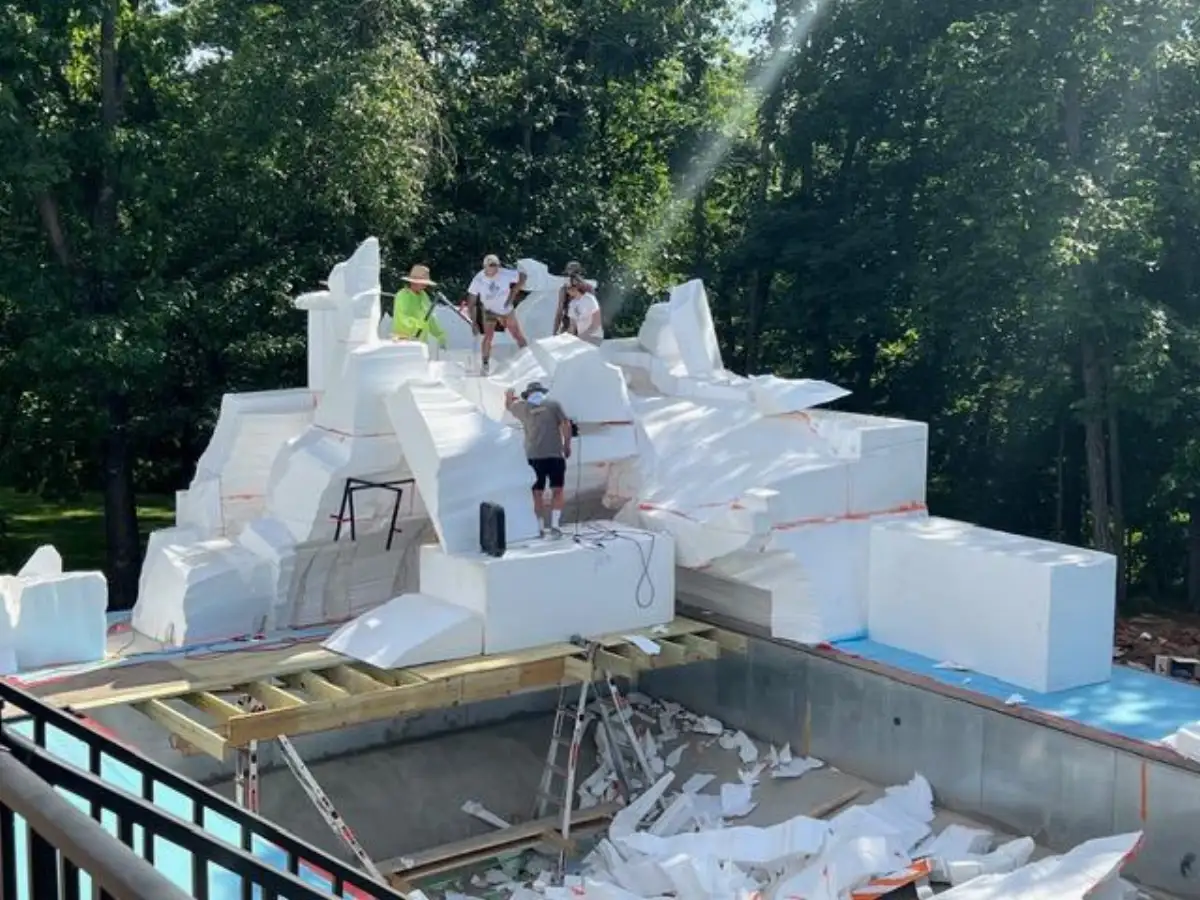
Yes, a custom waterfall can be added to most existing pools without major reconstruction. This is one of the most common questions we receive, and the answer is almost always encouraging. Whether your pool is five years old or twenty-five, the structural and plumbing requirements for a retrofit waterfall are well understood and manageable — provided the design is engineered for your specific pool.
I have retrofitted waterfalls onto pools built by dozens of different builders, across multiple states, in every common pool construction type (gunite, shotcrete, vinyl, and fiberglass). Each material and construction method has different considerations, but the fundamental process is the same: assess the existing structure, design a feature that integrates with it, and build without compromising what is already there.
The Structural Assessment: What We Evaluate
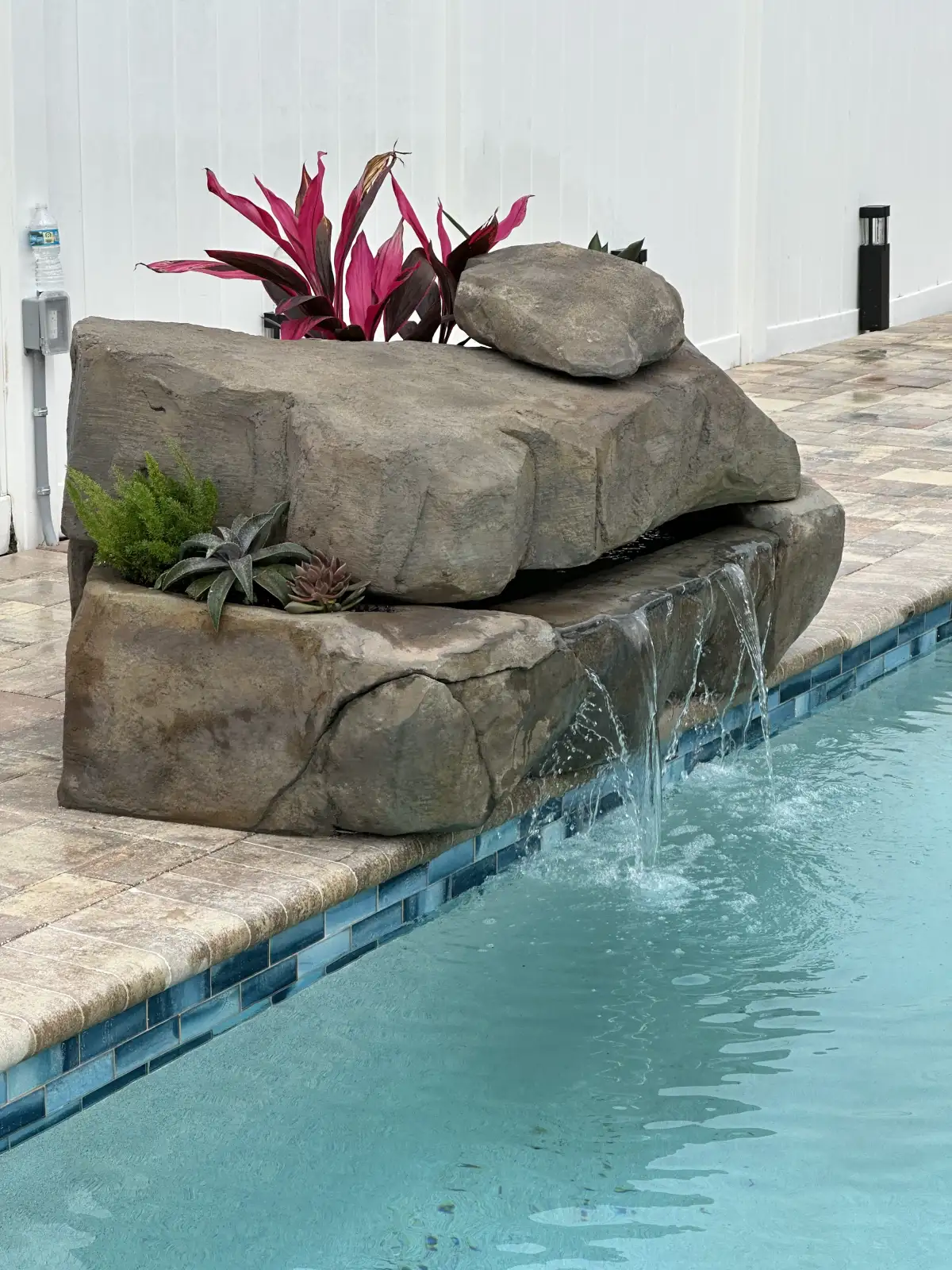
Before any design work begins, we conduct a thorough assessment of your existing pool and surrounding environment. This is not a quick visual check — it is a systematic evaluation of five key factors.
1. Pool Shell Type and Condition
The type of pool shell determines how the waterfall's footer connects to the existing structure. Gunite and shotcrete pools offer the most flexibility — they are rigid, monolithic structures that integrate well with additional concrete work. Vinyl liner pools can accommodate waterfalls but require different connection methods to avoid puncturing the liner. Fiberglass shells are the most constrained, but retrofit waterfalls can still be built adjacent to them with independent foundations.
We also evaluate the pool shell's current condition. Cracks, delamination, tile line damage, or waterproofing failures should be addressed before adding a waterfall. Adding weight and water flow to a compromised shell creates compounding problems.
2. Deck and Surrounding Hardscape
The area behind and adjacent to the waterfall location needs assessment for grade, drainage patterns, soil compaction, and existing utilities. We need to know what is under the surface — irrigation lines, electrical conduit, gas lines, and drainage piping all affect where we can place footers and route new plumbing.
3. Equipment Pad Capacity
A waterfall requires additional pumping capacity. Your existing equipment pad needs space for a dedicated waterfall pump (or an upgrade to your existing circulation pump, depending on the design). We evaluate available pad space, electrical panel capacity, and plumbing routing from the pad to the waterfall location.
4. Hydraulic Capacity
Your pool's plumbing system was designed for a specific flow rate. Adding a waterfall changes the hydraulic equation. We calculate the additional GPM (gallons per minute) required for the visual effect you want and determine whether new dedicated plumbing is needed or whether existing return lines can be repurposed.
5. Access and Logistics
This is the practical reality of retrofit work. We need to move materials and equipment to the waterfall location without damaging your existing landscape, pool deck, or structures. Tight side yards, established plantings, and completed outdoor living areas all require careful access planning. In some cases, materials are staged and moved by hand through narrow corridors. This adds labor time but does not change the quality of the result.
Plumbing Integration for Retrofits
Plumbing is where retrofit waterfalls differ most from new construction. In new construction, waterfall plumbing is installed before the deck is poured and landscape is installed. In retrofits, we are working around finished surfaces.
There are two primary approaches to retrofit plumbing:
Dedicated Waterfall Pump
This is our recommended approach for most retrofits. A separate pump dedicated to the waterfall operates independently of the pool's circulation system. Benefits include independent flow control (the waterfall can be on or off regardless of circulation), no impact on existing filtration performance, and simpler troubleshooting if issues arise.
The dedicated pump connects to the pool's existing skimmer or a new suction line, runs through a separate pipe routed to the waterfall, and returns water via gravity cascade back into the pool. Pipe routing typically follows the pool deck perimeter, buried 12-18 inches below grade, with minimal deck cutting.
Circulation System Integration
For smaller features, it is sometimes possible to tee into the existing return plumbing with a diverter valve. This avoids adding a pump but limits the available flow rate and means the waterfall only runs when the circulation pump is active. We recommend this approach only for small accent features where GPM requirements are modest.
Design Considerations for Retrofit Projects
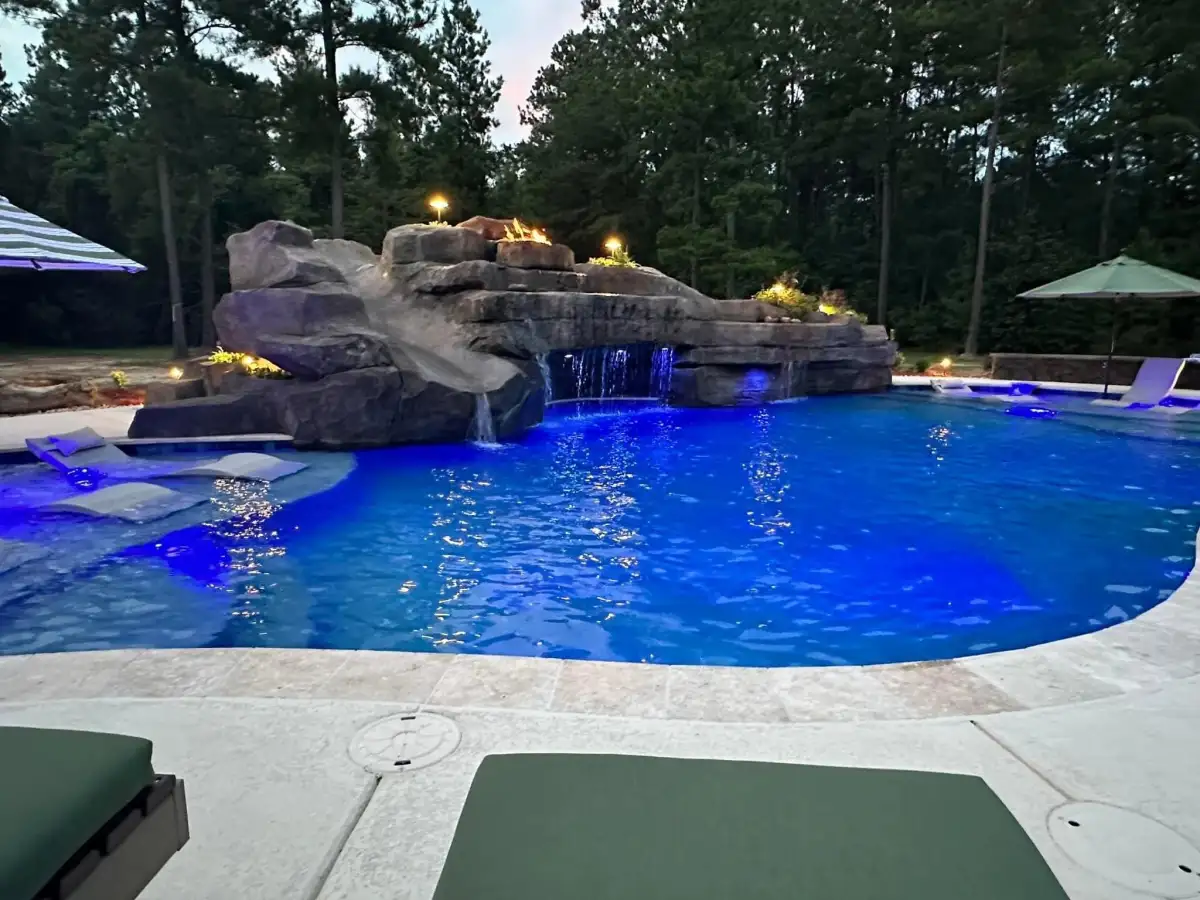
Designing a waterfall for an existing pool is different from designing one for a blank slate. The existing pool shape, deck layout, sight lines from the house, and overall landscape aesthetic all constrain and inform the design. This is where the maquette process becomes especially valuable.
Key design considerations for retrofits:
- Scale and proportion — The waterfall must look like it belongs with the existing pool, not like an afterthought bolted onto one end. We study the pool's geometry and the property's landscape to determine the right scale.
- Transition zones — Where the new feature meets existing deck, coping, or tile, the transition must be intentional. We can feather sculpted rock into existing materials, create a planted buffer, or design the feature to appear to emerge from the landscape.
- Water splash zone — Every waterfall creates a splash radius. In new construction, this is accounted for in the pool layout. In retrofits, we need to ensure the splash pattern falls within the pool, not onto the deck or adjacent seating areas. Cascade angle, lip profile, and flow rate all control this.
- Sound design — Water sound is part of the feature's impact. Higher drops create louder, more dramatic sound. Gentler slopes create a softer, ambient sound. For retrofits near bedroom windows or outdoor dining areas, we design the flow pattern to produce the right sound level for the space.
The Maquette Process for Retrofits
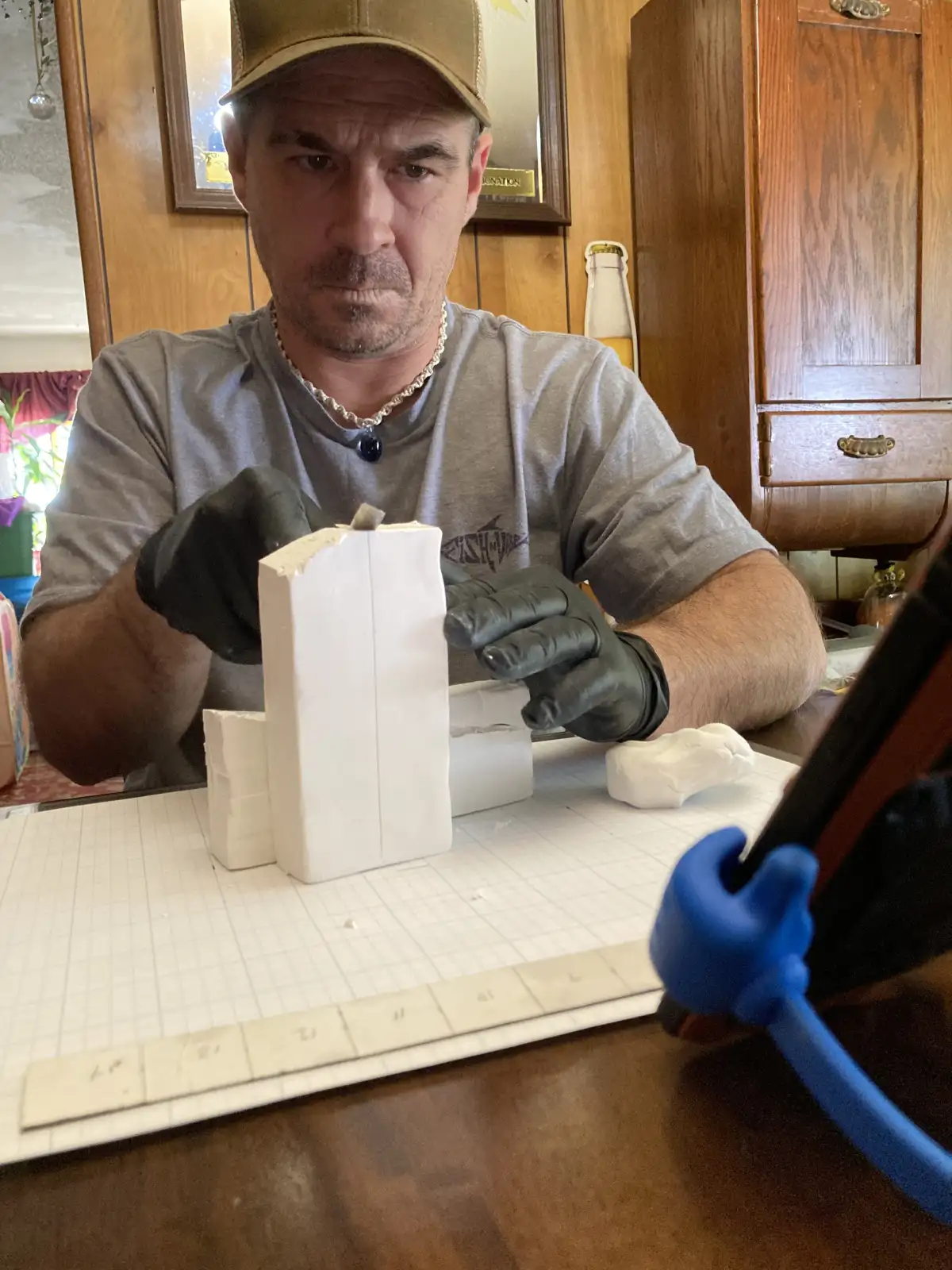
The maquette — our 1-inch-to-1-foot scale clay model — is arguably more important for retrofit projects than for new construction. When you are adding a sculptural element to an established environment, seeing the proportions, shapes, and integration points at scale eliminates the biggest risk in the project: building something that does not feel right in context.
For retrofit maquettes, we include a scaled representation of the existing pool, deck edge, and any adjacent structures. This lets you see exactly how the waterfall relates to your pool's shape, where the cascade meets the water surface, and how the feature profiles against your existing fence line or landscape.
The Design Engagement covers this entire process. If you decide not to proceed after seeing the maquette, the fee covers the consultation, site assessment, and model. If you do proceed, the full Design Engagement fee is applied to the project cost. Read more about our complete pricing breakdown.
Timeline for Retrofit Waterfall Projects
Retrofit timelines vary based on feature size and site complexity, but here is the typical breakdown:
- Design Phase (2-3 weeks) — Site assessment, maquette sculpting, client review and approval.
- Permitting (1-4 weeks) — Varies by municipality. Some jurisdictions require structural engineering reviews for pool modifications. We handle the application; you pay permit fees directly.
- Plumbing and Electrical Prep (2-3 days) — Trenching for new pipe runs, pump installation, electrical connections.
- Foundation and Footer (1-2 days) — Engineered footer poured and cured.
- Sculpting and Construction (1-3 weeks) — EPS foam core shaping, basalt reinforcement placement, fiber-reinforced shell application, sculpting mortar texture work, multi-layer finishing.
- Waterproofing and Sealing (2-3 days) — Application and curing of waterproofing, densification, and sealant.
- Final Integration and Startup (1 day) — Plumbing connection, pump testing, flow adjustment, final walkthrough.
Total elapsed time from design approval to running water: typically 6-10 weeks, depending on feature complexity and permit timelines. On-site construction time is usually 2-4 weeks, with your pool remaining usable for most of the process (we protect the water from construction debris with barriers).
Cost Range for Retrofit Waterfalls
Retrofit waterfalls typically cost 10-20% more than equivalent features built during initial pool construction. The premium reflects additional plumbing routing, existing surface protection, access logistics, and transition finishing.
General ranges for retrofit projects:
- Small accent feature (3-5 feet) — Entry-level investment for compact sculptural additions
- Medium waterfall (6-8 feet) — Mid-range investment for multi-tier cascade features
- Large feature with grotto or slide — Premium investment for comprehensive sculpted environments
These ranges include all design, materials, construction, plumbing, and finishing. Pump and electrical work are included. Permit fees and landscape restoration (replanting, deck patching) around the construction zone are typically the only additional costs.
For a detailed breakdown of what drives these numbers, read our full guide on custom pool waterfall costs.
What Makes a Pool a Poor Candidate for a Retrofit Waterfall?
Most pools can accommodate a waterfall, but there are exceptions. We will be straightforward about these during the assessment:
- Severely compromised pool shell — If the existing pool has major structural issues (bond beam cracks, significant settling, shell delamination), those need to be resolved first. Adding a feature to a failing structure compounds the problem.
- No available space — If every side of the pool is bounded by structures, property lines, or easements with zero setback available, the options are limited. We need at least 3-4 feet behind the waterfall for the feature depth and footer.
- Electrical panel at capacity — If the property's electrical service cannot accommodate an additional dedicated circuit for the waterfall pump, an electrical upgrade may be needed first.
- Above-ground pools — Hand-sculpted waterfalls are engineered for in-ground pool environments. The structural connection methods are not compatible with above-ground pool walls.
In our experience, fewer than 10% of assessment consultations result in a "this pool cannot support a waterfall" conclusion. Most limitations can be engineered around — they just need to be identified and planned for upfront.
Next Steps: Starting Your Retrofit Project
If you are considering adding a waterfall to your existing pool, the first step is a conversation. We will ask about your pool type, approximate dimensions, the area where you are envisioning the feature, and what you are hoping to achieve — visual impact, sound, a full grotto experience, or something else entirely.
From there, we schedule a site assessment (included in the Design Engagement if you proceed to the maquette phase, or a separate consultation fee if you want assessment-only). Within 7-10 days of the assessment, you will have a physical clay model of your waterfall, built to scale against your pool's profile.
No pressure. No generic renderings. Just a hand-sculpted model you can hold, evaluate, and approve before we touch a single bag of concrete.
Tell us about your pool or call (660) 383-6391 to start the conversation.