
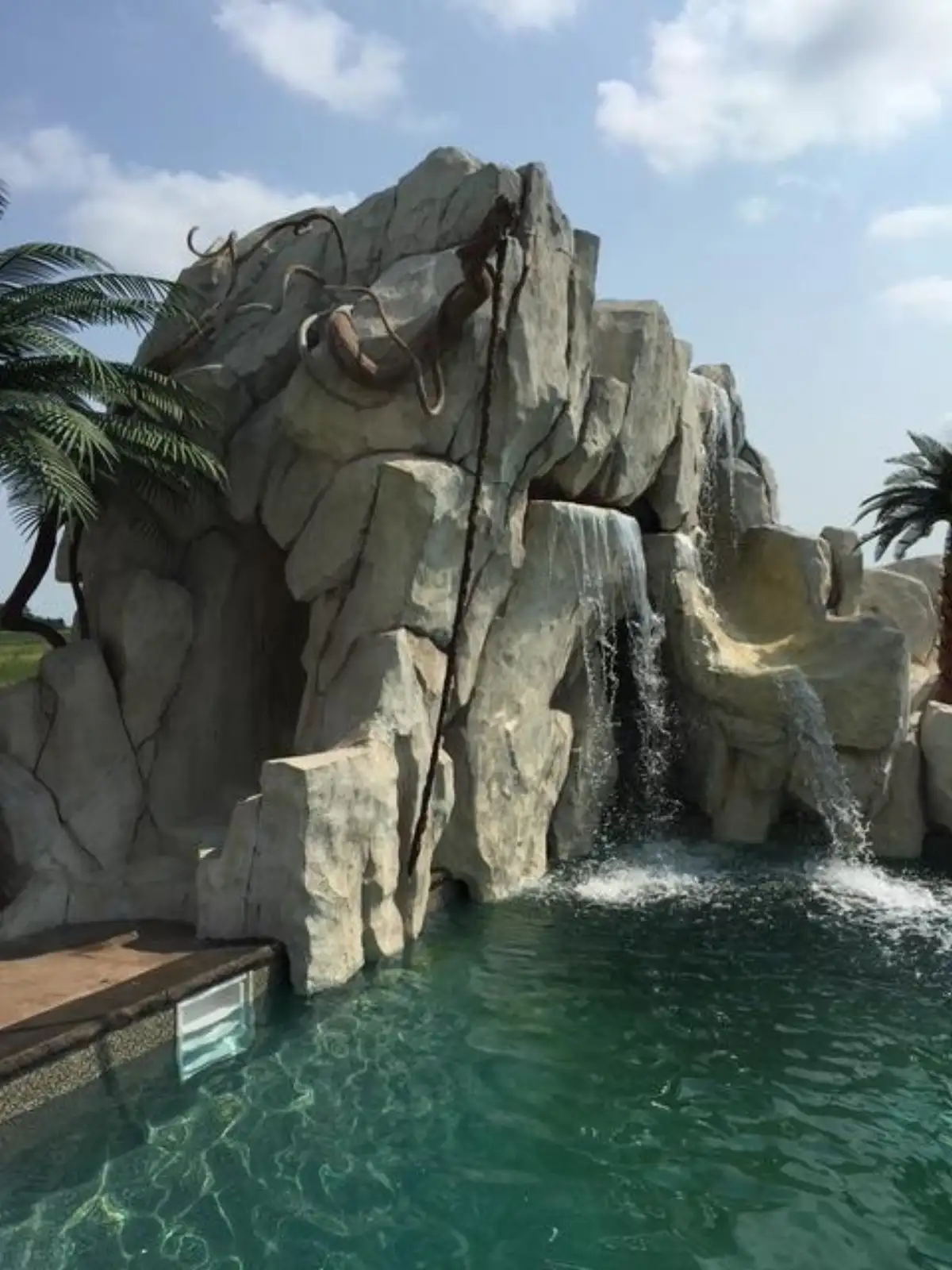
Polished Concrete Pool Slides — A Signature Boulder Legacies Feature
Very few builders in the country can sculpt a functional pool slide from concrete. We are one of them. Our polished concrete slides are hand-shaped, densified for a glass-smooth running surface, and integrated seamlessly into waterfall and grotto structures. No fiberglass. No bolt-on prefab. Structural art that you ride.
Why Almost Nobody Builds Concrete Pool Slides
Commercial fiberglass slides are everywhere. They bolt onto a deck, require an engineered steel frame, and look exactly like what they are — manufactured products. They serve a purpose, but they do not integrate with a sculpted environment.
A polished concrete slide is a different discipline entirely. It requires precise control of the slide channel geometry (radius, pitch, width, and banking), a surface densification process that produces a glass-smooth finish without being slippery when dry, and the structural engineering knowledge to support the slide load within a waterfall or grotto formation. Most concrete contractors do not have this skill set. Most waterfall builders do not attempt it.
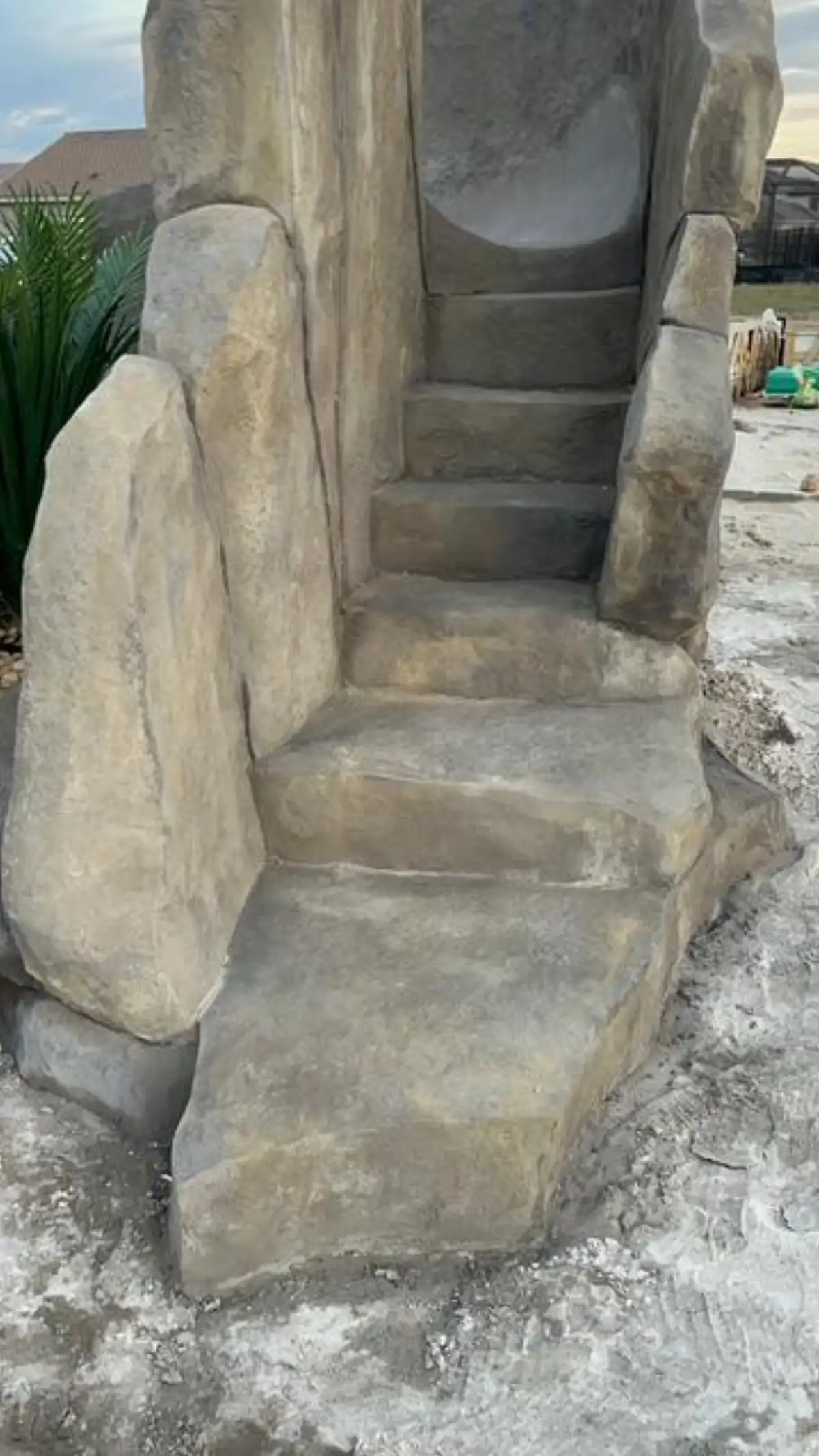
At Boulder Legacies, the slide is often the centerpiece of the build — emerging from a sculpted rock formation, winding through or alongside a waterfall, and depositing riders into the deep end of the pool. It is functional sculpture.
The Densification Process
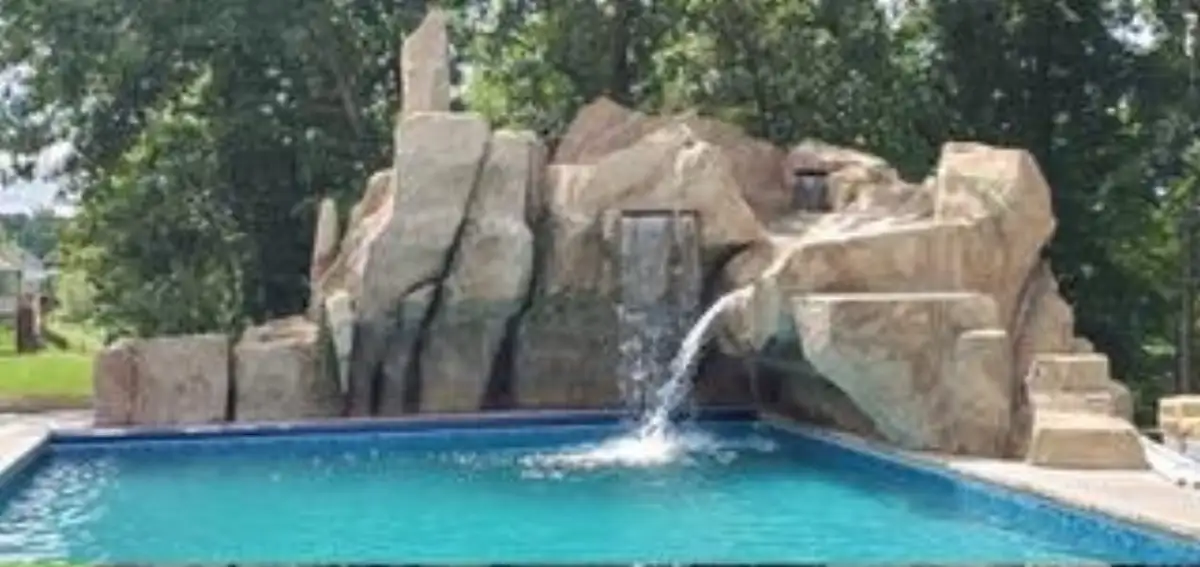
The running surface of every Boulder Legacies slide undergoes a chemical densification process that fundamentally changes the concrete at a molecular level. A lithium silicate densifier penetrates the surface, reacts with free calcium hydroxide in the concrete, and forms calcium silicate hydrate — a crystalline structure that is significantly harder and smoother than untreated concrete.
The result is a surface that is smooth enough for a fast, comfortable ride when water is flowing, yet provides adequate traction when dry. There is no paint, no gel coat, and no epoxy layer to chip, peel, or degrade under UV exposure. The smoothness is in the concrete itself — not on top of it.
- Lithium silicate densifier — permanent molecular bond
- No surface coatings to chip, peel, or fade
- UV-resistant — no discoloration over time
- Smooth when wet, textured when dry
- Continuous water flow during operation
- Integrated into 12,000psi structural shell
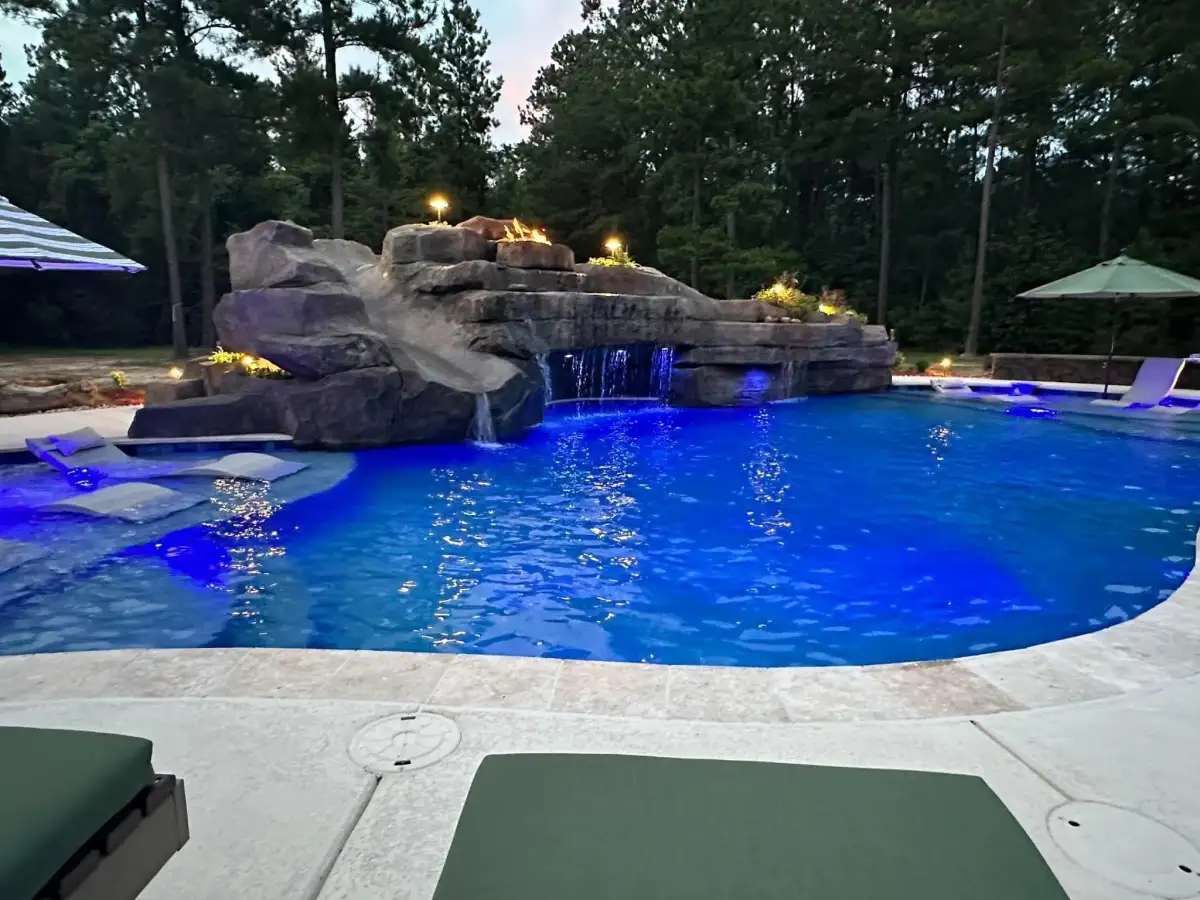
Slides Built Into Waterfalls & Grottos
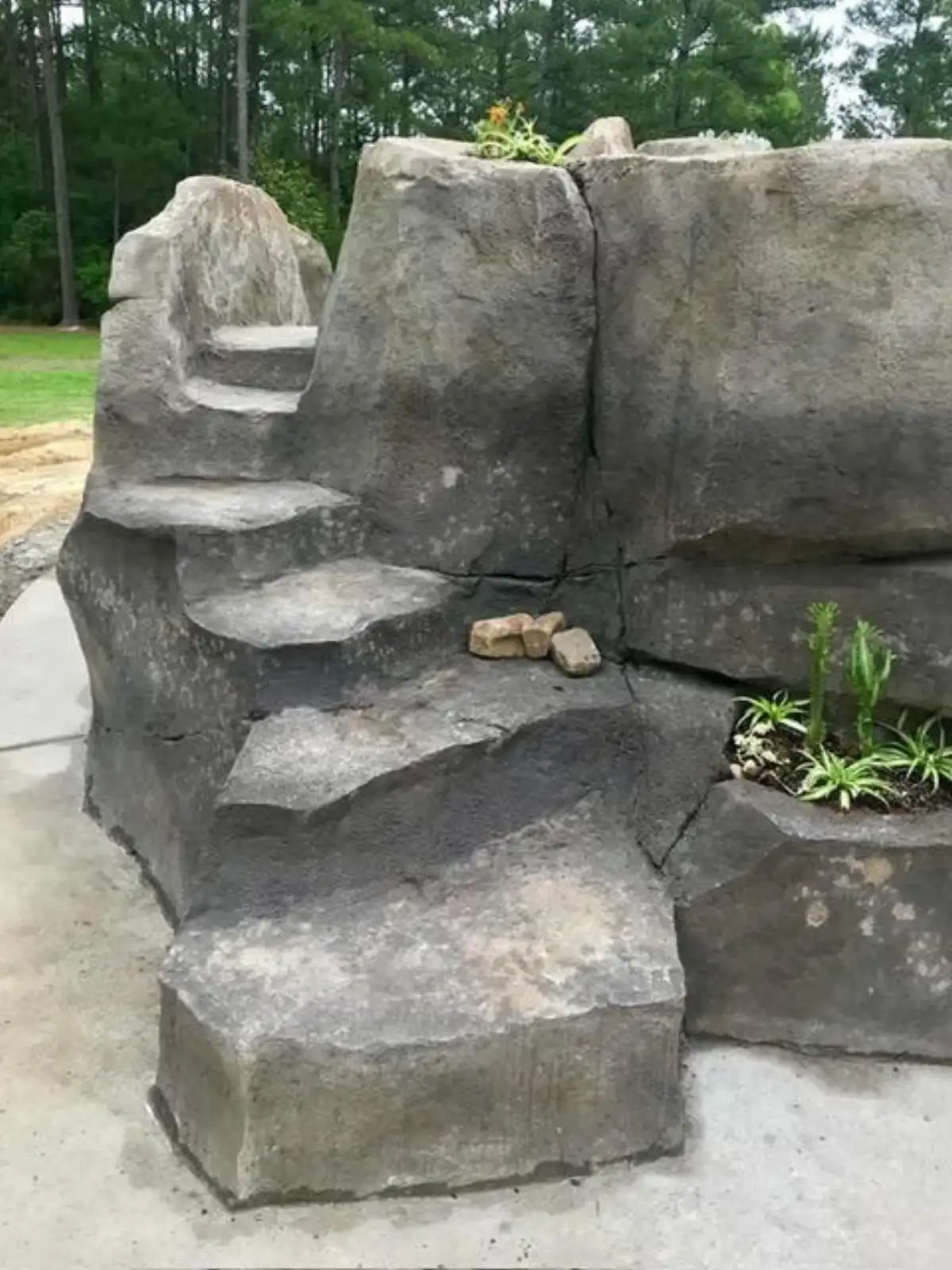
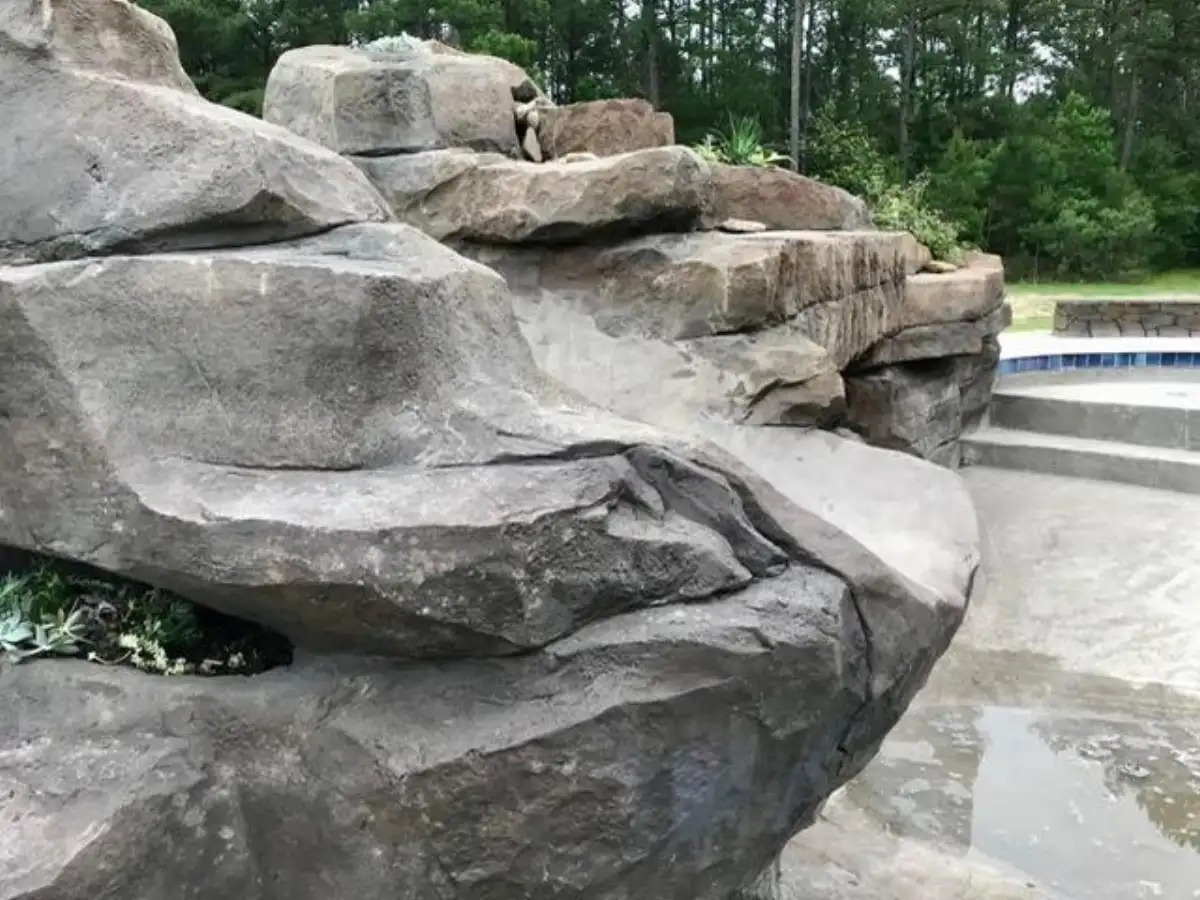
Our slides are not standalone structures. They are sculpted into the larger environment — emerging from rock formations, winding alongside cascading water, and terminating with a splash into the pool.
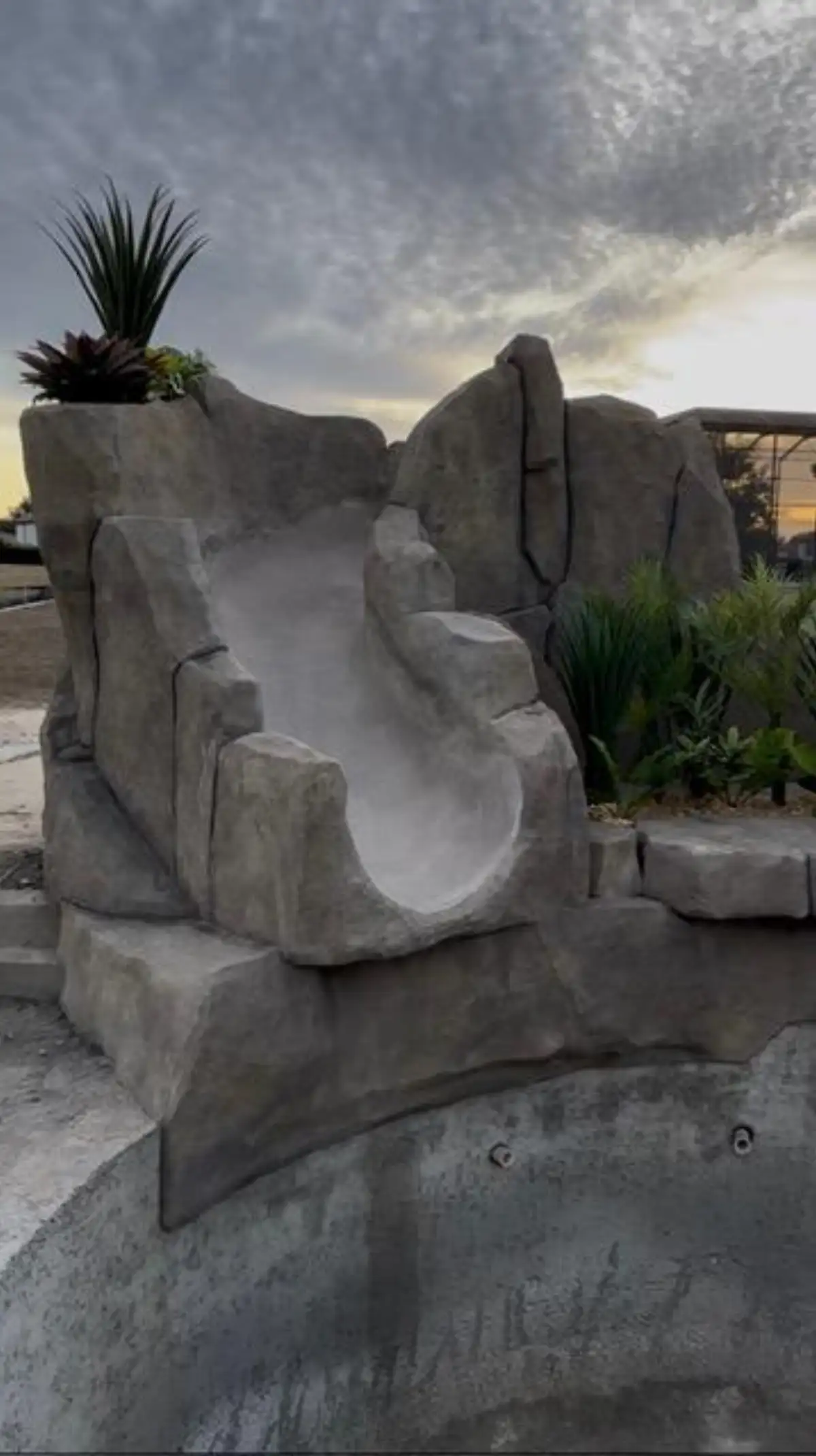
Designed for All Ages
Every slide we build is engineered with safety as the primary constraint. The channel geometry — width, depth, pitch angle, and curve banking — is calculated based on the slide height, intended rider weight range, and pool depth at the exit point.
Side walls along the entire slide channel prevent riders from leaving the path. The entry platform includes non-slip textured surfaces and is sized for safe, comfortable positioning. The exit trajectory is calculated to deliver riders into water at least 4 feet deep (pool code minimum varies by jurisdiction) with a controlled, predictable arc.
Continuous water flow across the running surface is provided by a dedicated pump line. The water serves two functions: it creates the smooth, fast ride surface, and it provides a consistent friction coefficient that makes the slide speed predictable regardless of temperature or humidity.
A Centerpiece Feature
Slide FAQ
Everything you need to know about polished concrete pool slides — safety, maintenance, and what makes them different.
Yes. Every slide is engineered with side walls along the entire channel, controlled pitch angles, and an exit trajectory calculated for safe entry into the pool. The densified running surface provides a consistent, predictable friction coefficient when water is flowing. We design slide dimensions (width, depth, pitch) based on the intended age range — slides for families with young children have lower heights, wider channels, and gentler slopes than those designed for adults.
We have built slides up to 14 feet in vertical height. The practical maximum depends on your property elevation, pool depth at the exit point, and local building codes. Most residential slides range from 6 to 10 feet. Taller slides require longer channels (more horizontal distance) to maintain a safe, comfortable pitch angle. We determine the optimal height during the design phase based on your specific site.
The densified surface requires very little maintenance. Because the smoothness is a molecular change in the concrete (not a coating), there is nothing to reapply, repaint, or refinish. Annual maintenance involves a gentle pressure wash to remove any mineral buildup or algae, and a visual inspection of the waterproofing at the channel edges. Re-sealing the waterproofing layer every 3–5 years is recommended, similar to the rest of the sculpted structure.
Our slides are designed for adults and children alike. The channel width, depth, and structural reinforcement are calculated to accommodate adult riders (typically up to 250–300 lbs, depending on the design). Many of our clients specifically request slides scaled for adult use. The 12,000psi structural shell and basalt rebar provide more than sufficient load capacity for the dynamic forces generated during a slide ride.
Densification is a chemical process where a lithium silicate solution is applied to the cured concrete surface. The silicate reacts with calcium hydroxide (a natural byproduct of cement curing) to form calcium silicate hydrate — a crystalline compound that fills the pore structure of the concrete, making it significantly harder, smoother, and more resistant to water absorption. Unlike epoxy or gel coat, densification is not a layer on top of the concrete. It is a permanent transformation of the concrete itself. The result is a surface rated approximately 8–9 on the Mohs hardness scale, comparable to quartz.
Add a Signature Slide to Your Environment
Whether standalone or integrated into a waterfall and grotto build, a polished concrete slide is a feature that defines the entire space. Let us show you what is possible.