
Fire and Water Feature Combinations: Engineering Contrast at the Pool Edge
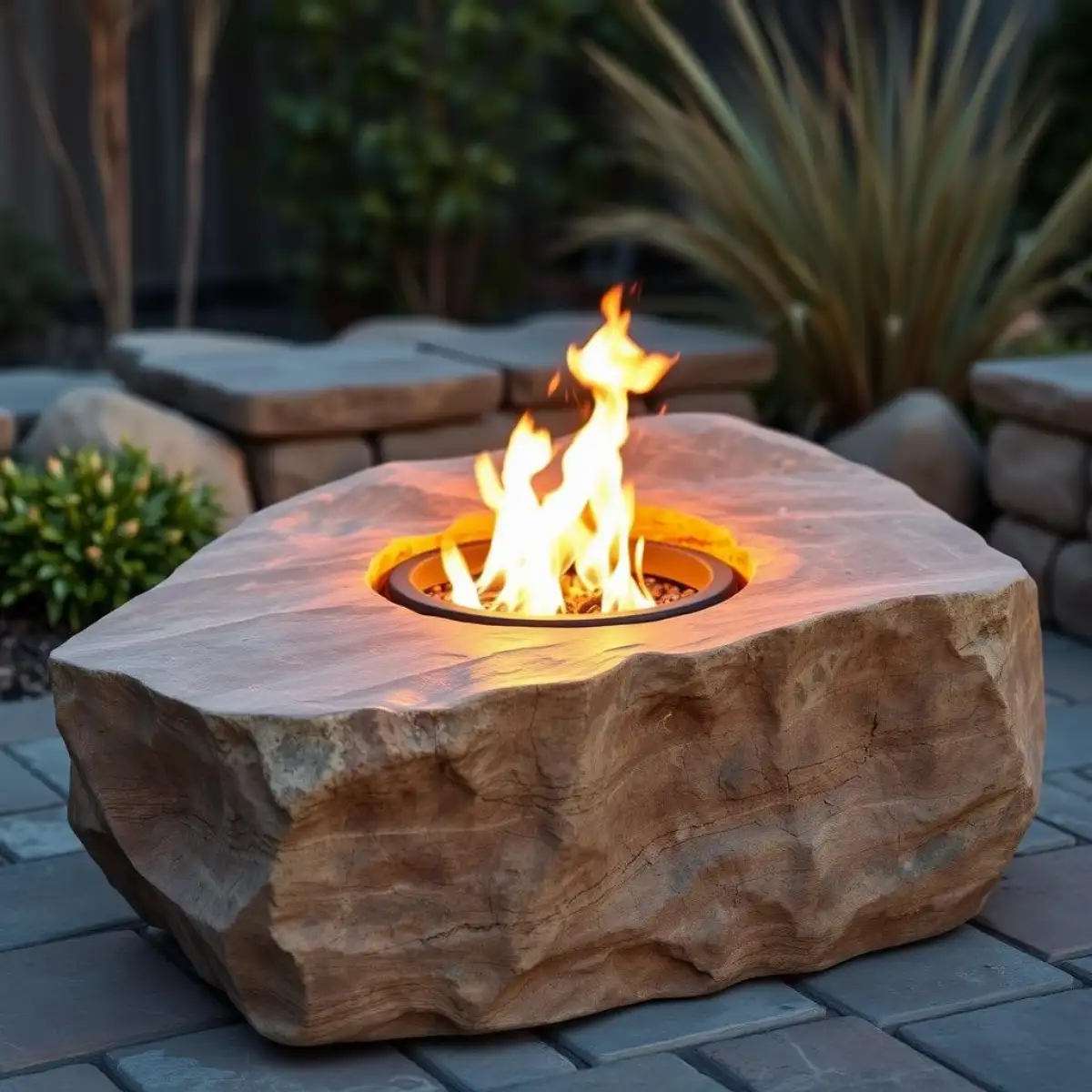
Fire and water are elemental opposites, and that opposition is exactly what makes them so compelling when they share the same environment. A flame dancing on top of a sculpted boulder while water cascades down the rock face beside it creates a visual tension that no single feature can achieve alone. At Boulder Legacies, fire-and-water combinations have become one of the most requested additions to our waterfall and grotto projects, and the engineering behind them is more involved than most homeowners expect.
This guide covers the design principles, structural engineering, gas system integration, and material considerations that go into building a fire and water feature that actually works, looks natural, and lasts decades.
Why Fire and Water Work Together
The appeal is not just aesthetic, though the aesthetics are striking. Fire and water combinations extend the usable hours of an outdoor space by providing both light and warmth after sunset. A waterfall that is only visual during daylight becomes a fully immersive experience when fire illuminates the cascading water from above, the sides, or from within integrated fire bowls at the water's edge.
There is also a sensory dimension that photographs cannot capture. The sound of moving water combined with the crackle and flicker of a live flame creates an atmosphere that holds attention in a way that neither element achieves independently. Clients who have both elements consistently report that the fire features are what draw guests to the pool area after dark, but it is the water that keeps them there.
The Design Spectrum
Fire and water combinations range from subtle accent to dominant feature. At the subtle end, a pair of fire bowls flanking a waterfall spillway adds warmth and light without competing with the water for attention. At the dramatic end, a continuous fire line running across the top of a grotto face, with water falling beneath it, creates a wall of opposing elements that becomes the defining feature of the entire outdoor environment.
The right scale depends on the pool size, the surrounding architecture, and how the space will be used. An intimate conversation area benefits from smaller, lower fire elements. An entertainment-focused backyard with a large pool and seating for twenty or more can support a feature that demands attention from across the property.
Types of Fire and Water Combinations We Build
Fire Rock Waterfall Integration
This is the most common configuration. Sculpted fire rocks are positioned at the top or along the sides of a waterfall formation, with gas burners concealed within the sculpted boulder. The flame appears to emerge directly from the rock surface, as though the stone itself is burning. Water cascades past or around the fire element, and the reflected light from both fire and water plays across the sculpted rock texture.
The engineering challenge is straightforward but unforgiving: gas lines must be completely isolated from water pathways, the fire element must be positioned so that wind and water spray do not extinguish the flame under normal conditions, and the stone texture must conceal all mechanical components so the fire appears organic rather than installed.
Fire Bowl and Waterfall Pairing
Fire bowls are sculpted concrete vessels positioned at the pool edge, on raised pedestals, or integrated into seating walls adjacent to a waterfall. The bowls can be designed to overflow with water on one side while fire burns on the other, creating a miniature fire-and-water feature within the bowl itself. Alternatively, they serve as standalone fire elements that complement a nearby waterfall through proximity rather than direct integration.
Fire bowls are particularly effective in outdoor living spaces where the pool and the social area are adjacent. They provide warmth for seated guests while the waterfall provides ambient sound and visual movement.
Grotto Fire Features
Integrating fire into a grotto environment requires the most careful engineering because the enclosed space concentrates heat and limits ventilation. A fire element inside a grotto must be sized to produce visual impact without raising the interior temperature uncomfortably or creating a combustion byproduct issue.
The most successful grotto fire features are positioned at the entry or along the grotto face, where natural air circulation prevents heat buildup. A line of flame along the grotto opening, with water cascading on either side, creates a dramatic threshold between the exterior pool and the interior cave space.
Scupper and Fire Wall Combinations
A scupper is a narrow slot in a raised wall that produces a thin, uniform sheet of water. When a fire element runs along the top of the same wall, the result is a clean geometric feature where fire sits above a curtain of water. This configuration works well in more contemporary designs where the surrounding architecture is linear rather than organic.
Even in these geometric applications, we sculpt the wall surface to match the natural rock aesthetic of the broader feature. The fire and water elements may be linear, but the material they emerge from still looks and feels like natural stone.
Engineering the Gas System
Every fire feature we build runs on natural gas or propane, plumbed through a dedicated gas line that is completely independent of any water plumbing. The gas system components include a supply line from the property's gas meter (or a propane tank for properties without natural gas), a shut-off valve accessible from outside the rock formation, electronic ignition with a flame sensor for safety, a wind guard or recessed burner tray to maintain flame stability, and a stainless steel or marine-grade brass burner rated for outdoor exposure.
Gas Line Routing
Gas lines are routed through the interior of the sculpted rock formation during construction, before the final mortar and texture layers are applied. This means the gas infrastructure must be planned during the maquette phase and installed during the structural phase, not added after the feature is complete. Retrofitting gas into an existing sculpted feature is possible but significantly more complex and expensive than including it in the original build.
Ignition and Control
We install electronic ignition systems with remote control or smart home integration. The client can turn fire elements on and off from a wall panel, a handheld remote, or a phone app. Flame sensors automatically shut the gas supply if the flame is extinguished by wind, preventing unburned gas from accumulating in any enclosed space.
For features with multiple fire elements, each element can be controlled independently. This allows the homeowner to light a single fire bowl for an intimate evening or activate the entire fire line for a full-scale entertainment event.
Material Considerations
Fire introduces thermal stress that standard concrete features do not experience. The sculpted rock surface within 12 inches of a fire element must be formulated to handle repeated thermal cycling without cracking, spalling, or discoloration.
Our approach uses the same 12,000 psi fiber-reinforced cementitious shell and basalt rebar system that structures all of our work, but with additional heat-resistant additives in the mortar mix for fire-adjacent zones. Basalt rebar is inherently fire-resistant (it does not conduct heat the way steel does), which is one of the reasons we use it throughout our builds rather than traditional steel reinforcement.
The mortar texture in fire zones is formulated with refractory-grade materials that resist thermal discoloration. Standard mortar would develop soot staining and heat marks within months. Our fire-zone formulation maintains its natural stone appearance through years of regular use.
Water Management Near Fire
The proximity of water and fire creates a specific engineering requirement: water must never reach the burner assembly, and gas must never contact the water system. This sounds obvious, but in a feature where a waterfall cascades within inches of a fire element, the margin for error is measured in fractions of an inch.
We achieve this separation through several techniques. Sculpted channels direct water flow away from fire elements while appearing natural. Concealed drip edges and waterproofing barriers prevent water migration through the rock surface toward gas components. Burner assemblies are recessed within ventilated chambers that allow combustion air in while keeping water out. Drainage paths behind fire elements ensure that rain or splash water exits the formation without contacting any gas infrastructure.
Common Configurations by Market
The fire and water combinations we build vary by region, driven partly by climate and partly by local design preferences. In Scottsdale and Las Vegas, fire features are used heavily because the evening temperatures drop quickly in the desert and the fire provides welcome warmth during the cooler months. In Nashville and Dallas, fire elements are primarily decorative and used during a broader range of months. In Tampa and Orlando, fire accents are more common than large fire features because the humid climate makes open flame less comfortable in close proximity during the warmer months.
Regardless of region, the engineering principles remain the same. Only the scale and positioning change based on how the fire will be experienced in that specific climate.
What Fire and Water Adds to a Project
Adding fire elements to a waterfall or grotto project typically adds to the overall scope, with the exact amount depending on the number of fire points, the complexity of gas routing, and whether the fire elements are integrated into the rock formation or positioned as standalone features. The gas system and fire hardware are meaningful components, but much of the cost is in the additional design and engineering time required to ensure proper separation of fire and water systems within a shared structure.
For detailed pricing context on the waterfall and grotto components, see our custom pool waterfall cost breakdown.
Start With the Full Picture
Fire and water features work best when they are planned together from the beginning. If you are considering a waterfall, grotto, or slide feature and want fire integration, the time to include it is during the design phase, not after the rock is sculpted. Our maquette process models fire element placement at 1:12 scale so you can see exactly how the flame interacts with the water before any construction begins.
Tell us about your project or call (660) 383-6391 to discuss how fire and water can work together in your environment.