
Polished Concrete Pool Slides: The Complete Guide to a Signature Summer Feature
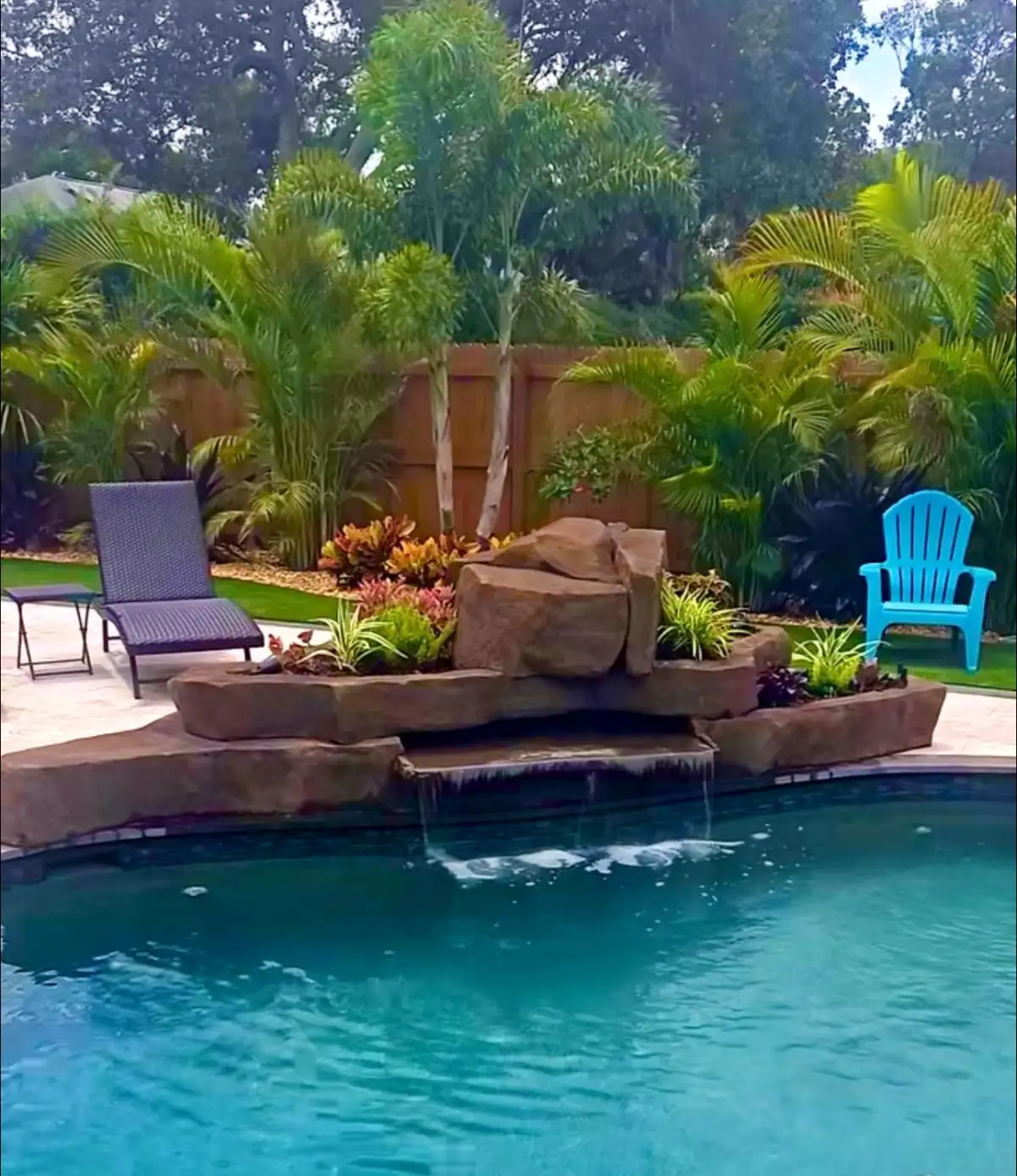
A polished concrete pool slide is not a plastic chute bolted to your deck. It is a hand-sculpted, structurally engineered surface built directly into the rock formation surrounding your pool. The result is a slide that looks like it was carved from the landscape itself, delivers a smoother ride than any factory product, and will outlast the pool it serves. At Boulder Legacies, polished slides are one of our most requested features, and for good reason: they transform a standard backyard pool into an environment that feels like a private resort.
This guide covers everything a homeowner needs to know about polished concrete pool slides, from how the surface achieves its friction-free glide to how these features integrate with custom waterfalls and grotto environments.
What Makes a Polished Concrete Slide Different
Most pool slides on the market are injection-molded fiberglass or rotational-molded plastic. They bolt onto a concrete pad beside the pool and stand as a separate structure, visually disconnected from the surrounding landscape. A polished concrete slide is fundamentally different in three ways.
Integrated Construction
Our polished concrete slides are sculpted as part of the rock formation, not attached to it. The slide surface, the surrounding boulders, the waterfall cascades, and any grotto elements are all built from the same structural system: an EPS foam core reinforced with basalt rebar, coated with our 12,000 psi fiber-reinforced cementitious shell, and finished with sculpted mortar for natural rock texture. The slide is the rock.
Custom Geometry
Factory slides come in fixed shapes, fixed lengths, and fixed curves. A hand-sculpted slide is designed around your specific pool geometry, deck elevation, and desired ride experience. We control the entry height, curve radius, banking angle, and landing zone depth. Some clients want a gentle, child-friendly glide. Others want a fast, spiraling descent that launches into a deep zone. The concrete does not care; it can be formed into any path.
Surface Engineering
The polished surface is where the engineering becomes particularly precise. After the structural shell and mortar work are complete, the slide channel receives a multi-stage densification process. This involves chemical hardeners that react with the concrete to create a glass-smooth surface at the molecular level. The result is a coefficient of friction lower than fiberglass when wet, meaning the ride is faster and smoother. Water flowing down the slide channel acts as a continuous lubricant, and the densified surface resists algae growth far better than porous alternatives.
How Polished Slides Are Built
The construction process follows the same fundamental approach we use for all sculptural concrete features, with additional steps specific to slide engineering.
Design and Maquette
Every slide begins in our Design Engagement phase. The slide path, entry platform, and landing zone are designed in context with the broader feature. Our 1:12 scale maquette includes the slide channel so clients can see exactly how the ride path integrates with the surrounding rock formation before construction begins.
Structural Foundation
The slide's substructure must support both static load (the weight of the concrete and rock texture above it) and dynamic load (the force of a person sliding at speed through curves). We engineer the foam core and basalt reinforcement to handle both, with additional reinforcement at curve transitions where lateral forces concentrate.
Channel Formation
The slide channel is formed with precise cross-sectional geometry. The sides curve upward to contain the rider through turns. The bottom follows a calculated radius that maintains safe speed throughout the run. Transitions between straight sections and curves are gradual, eliminating the jarring shifts that characterize bolt-on slides.
Densification and Polish
Once the mortar texture is complete on the surrounding rock, the slide channel receives its specialized treatment. The densification process involves multiple applications of lithium-based hardeners over several days. Between applications, the surface is mechanically polished to progressively finer grades. The final result is a surface that is simultaneously extremely hard (resistant to abrasion and impact) and extremely smooth (low friction when wet).
Water Integration
A continuous water flow is plumbed to the top of the slide, fed from the same pump system that drives the waterfall. This serves two purposes: it maintains the lubricated surface that makes the ride smooth, and it provides the visual effect of water cascading down the slide path, integrating it with the waterfall environment. The water volume is calibrated so the slide channel carries a thin, even sheet without pooling or dry spots.
Polished Concrete vs. Fiberglass: The Full Comparison
If you have researched pool slides, you have likely seen factory fiberglass models priced between $3,000 and $15,000 installed. Here is how they compare to a hand-sculpted polished concrete slide on the metrics that actually matter for long-term satisfaction.
Aesthetics
A fiberglass slide is a separate object sitting beside your pool. No matter how much landscaping you add around the base, it still looks like a commercial product in a residential setting. A polished concrete slide disappears into the rock formation. Guests often do not realize the slide is there until someone uses it, because the entry point is integrated into the boulders.
Ride Quality
Fiberglass slides rely on a thin water stream from a garden hose connection for lubrication. The surface develops micro-scratches over time that increase friction and slow the ride. A densified concrete surface actually improves with age as the chemical hardener continues to cure, and the integrated water system delivers consistent flow across the entire channel width.
Durability
Fiberglass slides typically last 10 to 15 years before UV degradation, gelcoat cracking, and structural fatigue require replacement. A densified concrete slide has no practical lifespan limit. The material does not degrade from UV exposure, does not crack from thermal cycling, and the surface can be re-polished decades later if needed.
Safety
Both types meet applicable safety standards when properly installed. The advantage of custom concrete is that we can design the entry height, landing zone depth, and slide path specifically for your pool dimensions and the ages of the people who will use it most. Factory slides offer one or two height options and a fixed curve geometry that may or may not match your pool depth profile.
Who Builds Polished Concrete Slides
This is a specialty within a specialty. The number of builders in the United States who can engineer and execute a polished concrete pool slide at the quality level required for a safe, smooth ride is extremely small. The skill set requires concrete engineering knowledge, sculptural artistry, and surface chemistry expertise that most contractors simply do not have.
At Boulder Legacies, polished slides have been a signature offering since our earliest projects. Lucas Speakman has personally sculpted slides in markets from Tampa to Scottsdale, refining the densification process and channel geometry through dozens of builds. Every slide is sculpted by the same hands that built the maquette, ensuring consistency from model to finished feature.
Integration With Waterfalls and Grottos
Polished slides reach their full potential when integrated with other sculptural elements. The most common configurations we build include:
- Waterfall and slide combination — The slide channel emerges from within the waterfall rock formation, with cascading water on both sides of the entry. The rider descends through the waterfall environment into the pool.
- Grotto exit slide — The slide begins inside a sculpted grotto, passing through the cave opening and emerging into open air before landing in the pool. This creates a dramatic transition from enclosed to open space during the ride.
- Multi-level integration — On properties with significant grade changes, we can incorporate slides that span elevation changes larger than what a standalone structure could achieve, using the natural or sculpted topography as part of the slide path.
- Dual slide paths — For estate-scale features, parallel slide channels of different speeds and curves allow simultaneous use, which is particularly popular for families with children of different ages.
What to Expect: Cost and Timeline
A polished concrete slide is typically part of a larger feature rather than a standalone addition. The slide component adds to the overall project scope depending on length, complexity, and the degree of integration with surrounding elements. Projects that include a slide alongside a waterfall and grotto are among our most substantial builds.
For detailed pricing guidance, see our custom pool waterfall cost breakdown, which covers the factors that influence overall project investment including slide integration.
Timeline for the slide-specific work is typically 3 to 5 days within the broader construction schedule, with an additional 5 to 7 days for the densification and polishing process. The polishing cannot be rushed because each hardener application needs cure time before the next stage.
Summer Is the Best Time to Enjoy One. Fall Is the Best Time to Plan One.
If you are reading this in late May, you are doing exactly what we recommend: researching now, with the understanding that a custom feature of this caliber requires lead time. As we discussed in our summer waterfall planning guide, the ideal design start window for a summer completion is fall or winter.
That said, if you are targeting a fall or early next-year completion, starting the design conversation now puts you in an excellent position. The maquette and permitting happen over summer when our design calendar has availability, and construction begins when temperatures are ideal for concrete work.
Start the Conversation
A polished concrete slide is not something you order from a catalog. It begins with a conversation about your pool, your property, and the experience you want to create. We will show you what is possible with a hand-sculpted maquette you can hold before any construction begins.
Tell us about your project or call (660) 383-6391 to explore what a signature slide could look like in your environment.